Only logged in customers who have purchased this product may leave a review.


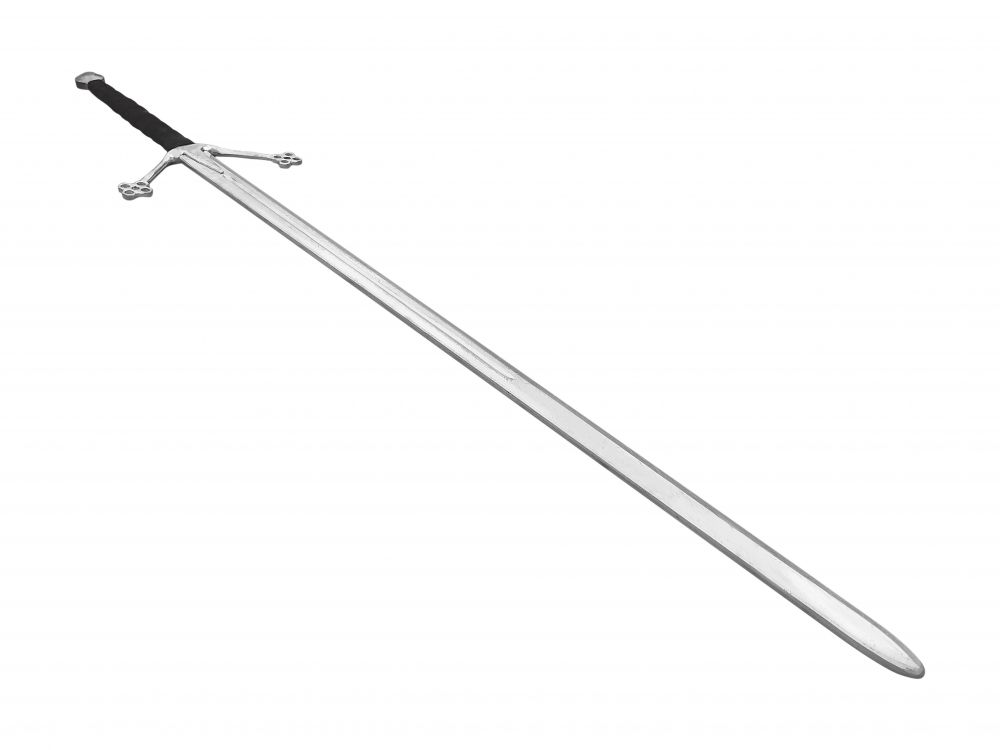
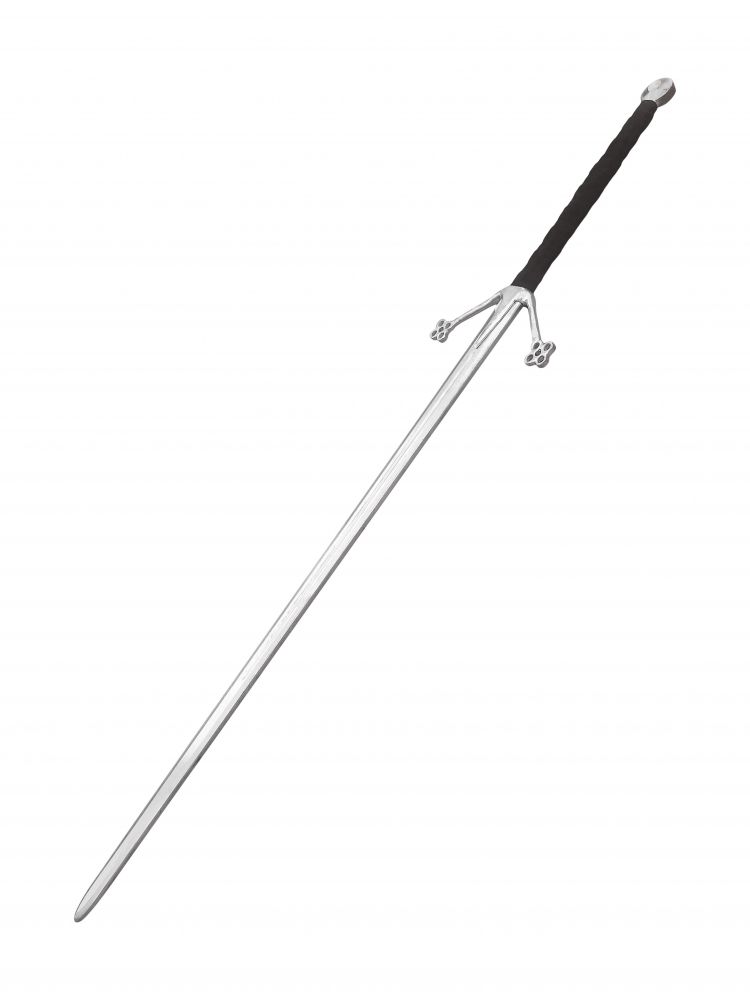
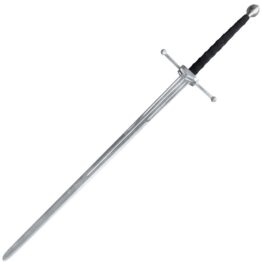
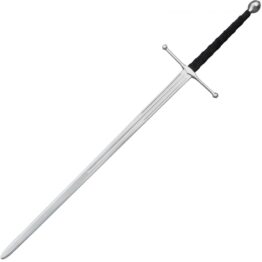
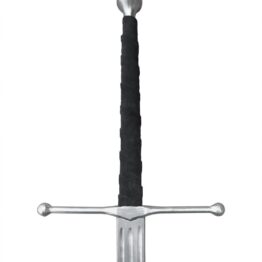
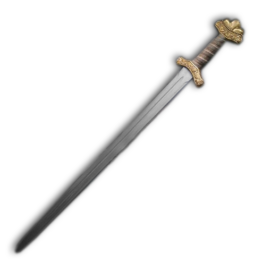
Textolite Two-Handed Claymore
€225.00
- Material: Fiberglass-textolite (fabric-based textolite) or fiberglass.
- Total length: 150 cm
- Blade length: 110 cm
- Guard length: 40 cm
- Blade thickness: 12 mm
- Blade width at the guard: 5 cm
- Weight: approx. 2500 g
- Guard and pommel: Steel
The Claymore (Scottish Gaelic claidheamh-mòr, meaning “great sword”) is a distinctive type of two-handed (rarely one-handed) sword used in Scotland during the 15th–17th centuries.
The name originates from claidheamh mòr, possibly derived from the Latin gladius. Sometimes, “claymore” is mistakenly used to describe the Scottish basket-hilted broadsword (claidheamh leathann), though some sources suggest the term originally referred to this type of sword.
Design Features:
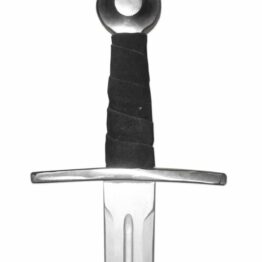
The Claymore is a two-handed sword with a long grip and a broad blade.
Blade length is around 105–110 cm, with a grip of 30–40 cm, making the total length 135–150 cm.
According to Oakeshott’s typology, Claymores belong to types XIIa and XIIIa.
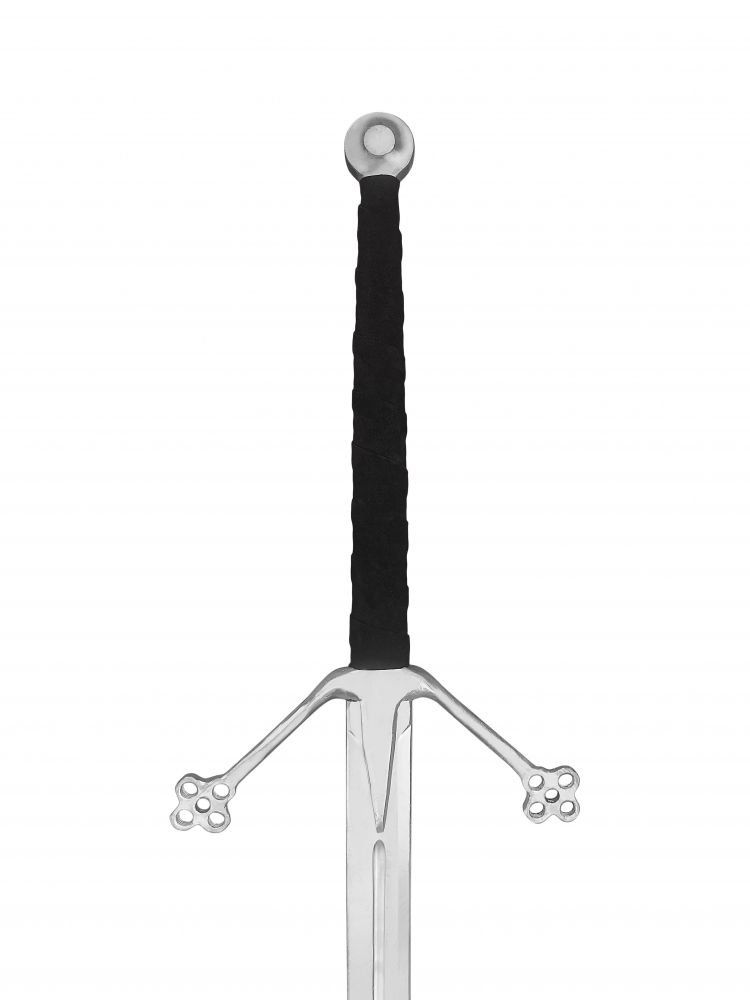
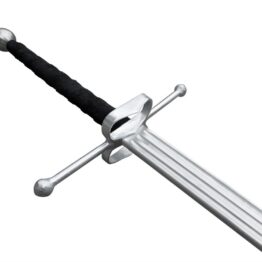
The crossguard is straight and tapers at the ends, angling downward (from the grip toward the blade).
The ends of the guard are often decorated with a four-leaf clover motif.
The pommel is usually disc-shaped, though spherical variations exist.
Some Claymores had a ricasso, allowing for half-swording techniques (Halbschwert in German).
Compared to other European two-handed swords of the period, the Claymore was lighter and more maneuverable. The unique crossguard design allowed for blade control and disarming techniques, making it a versatile and effective weapon in combat.


Reviews
There are no reviews yet.