Only logged in customers who have purchased this product may leave a review.
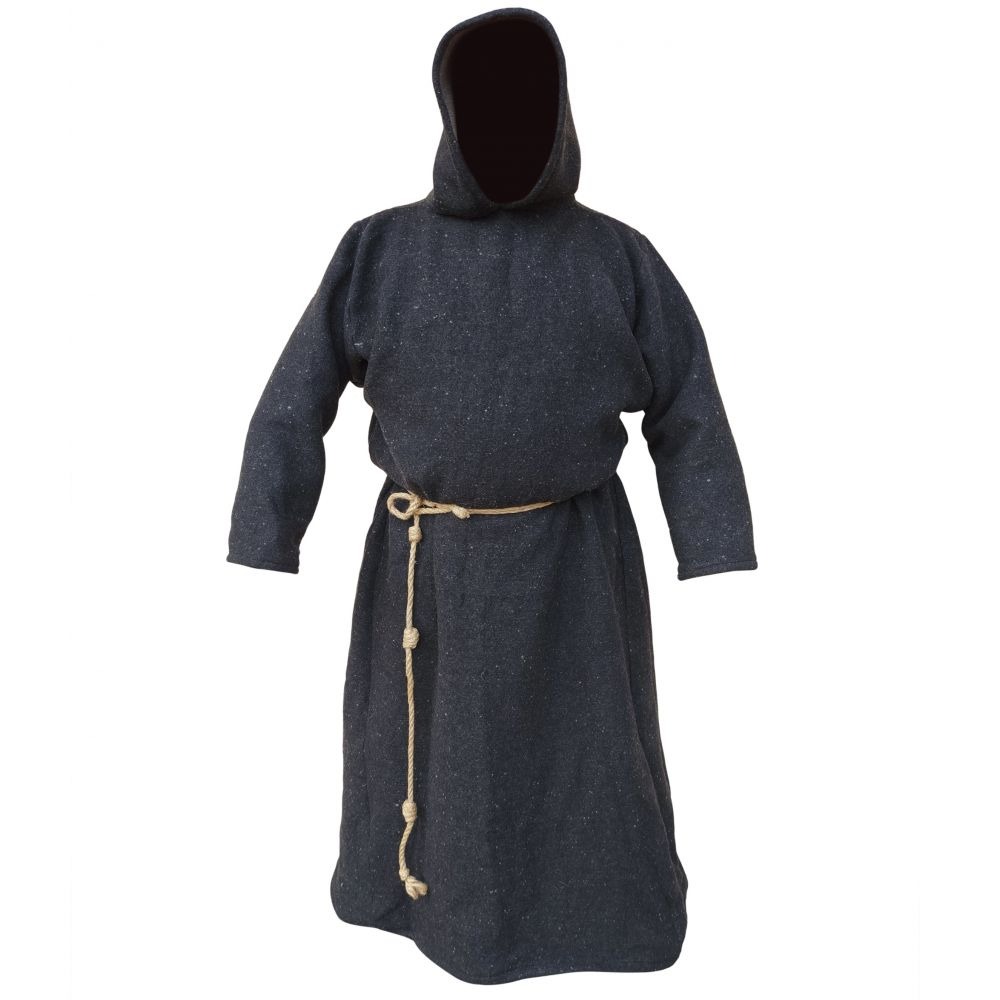
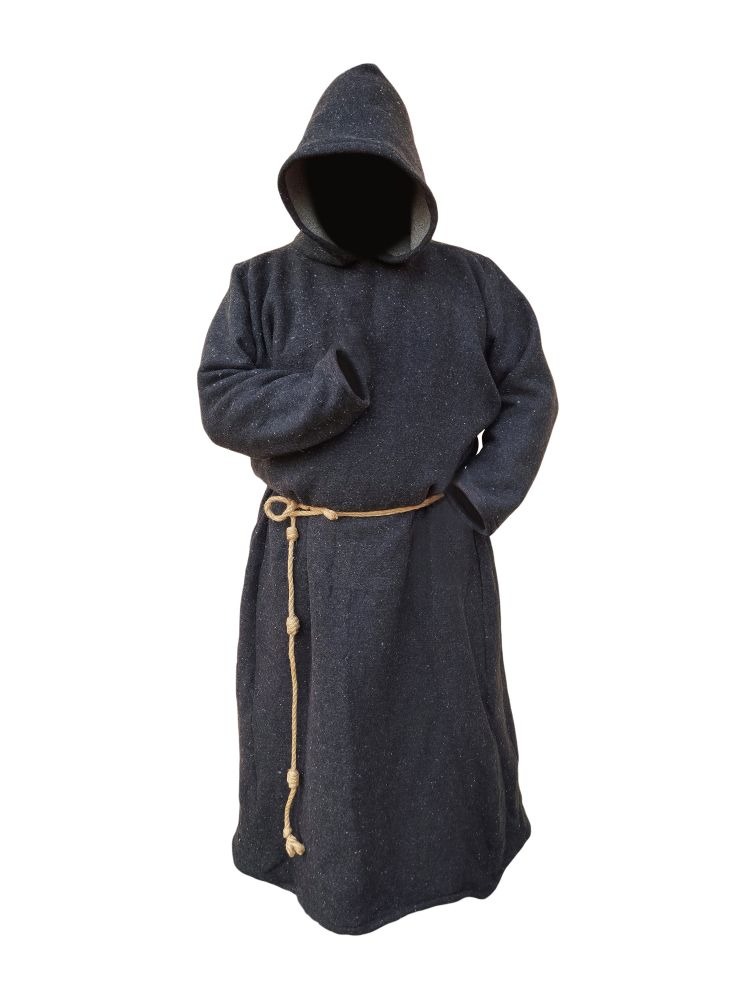
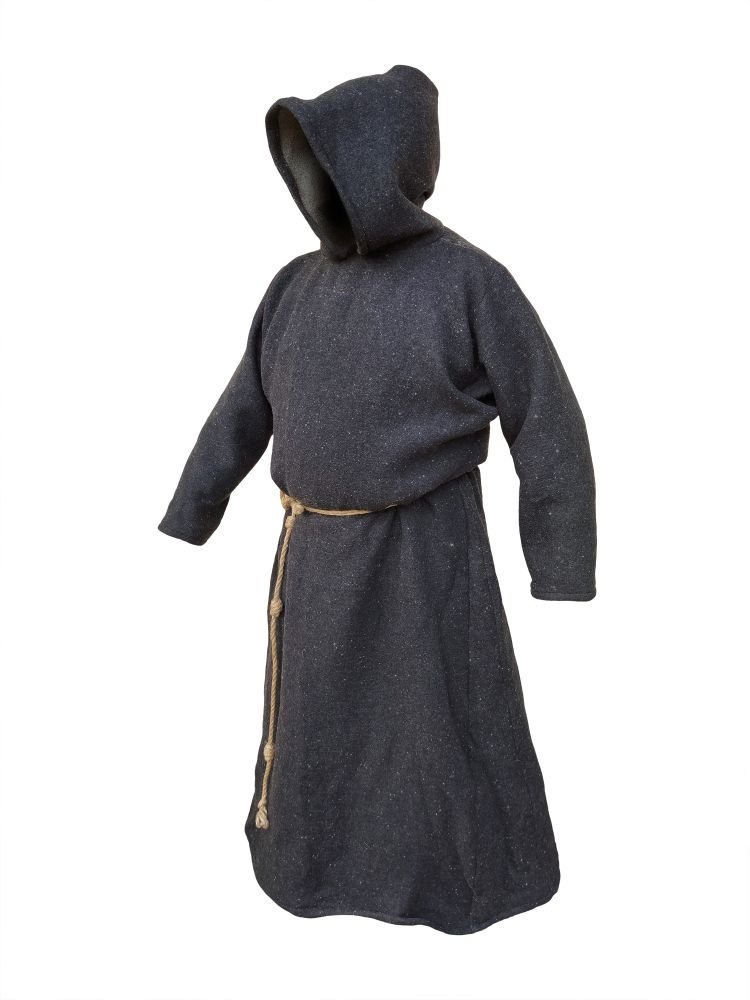
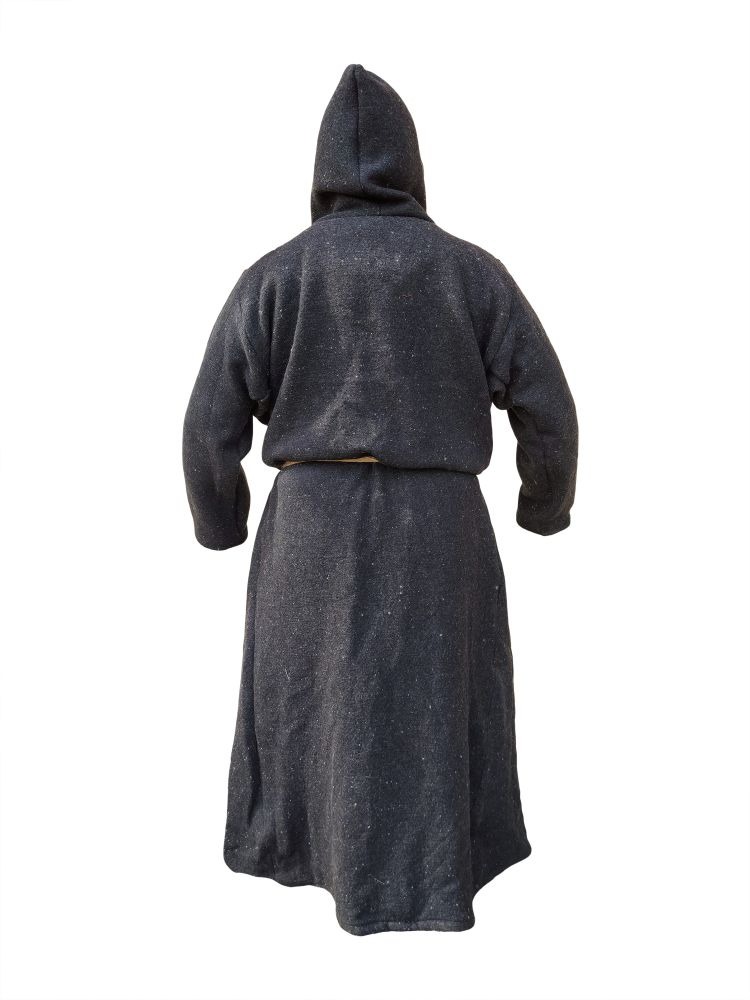

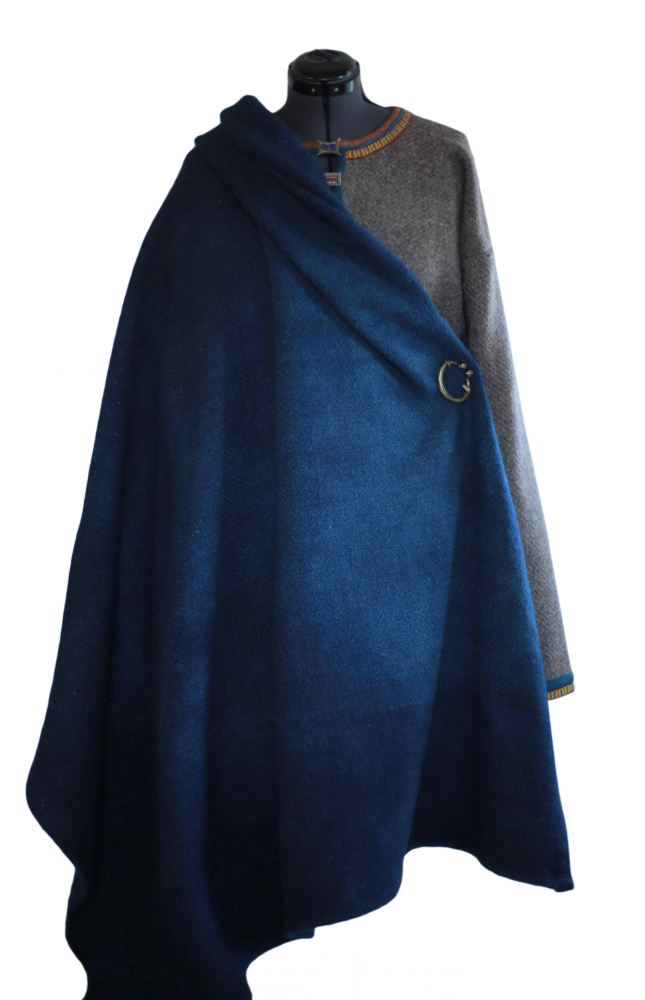
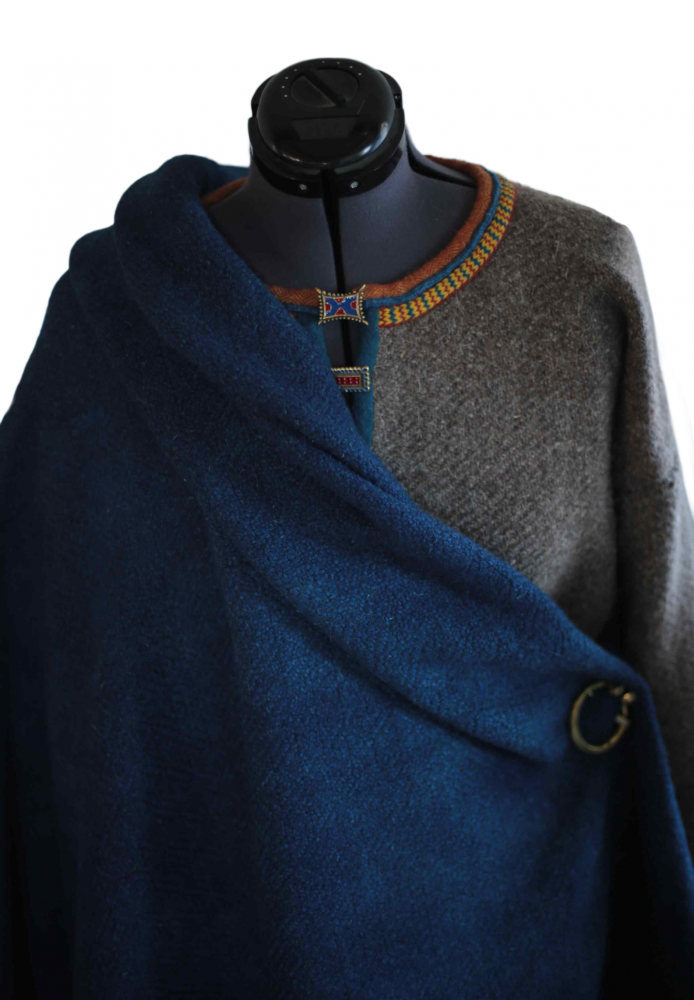
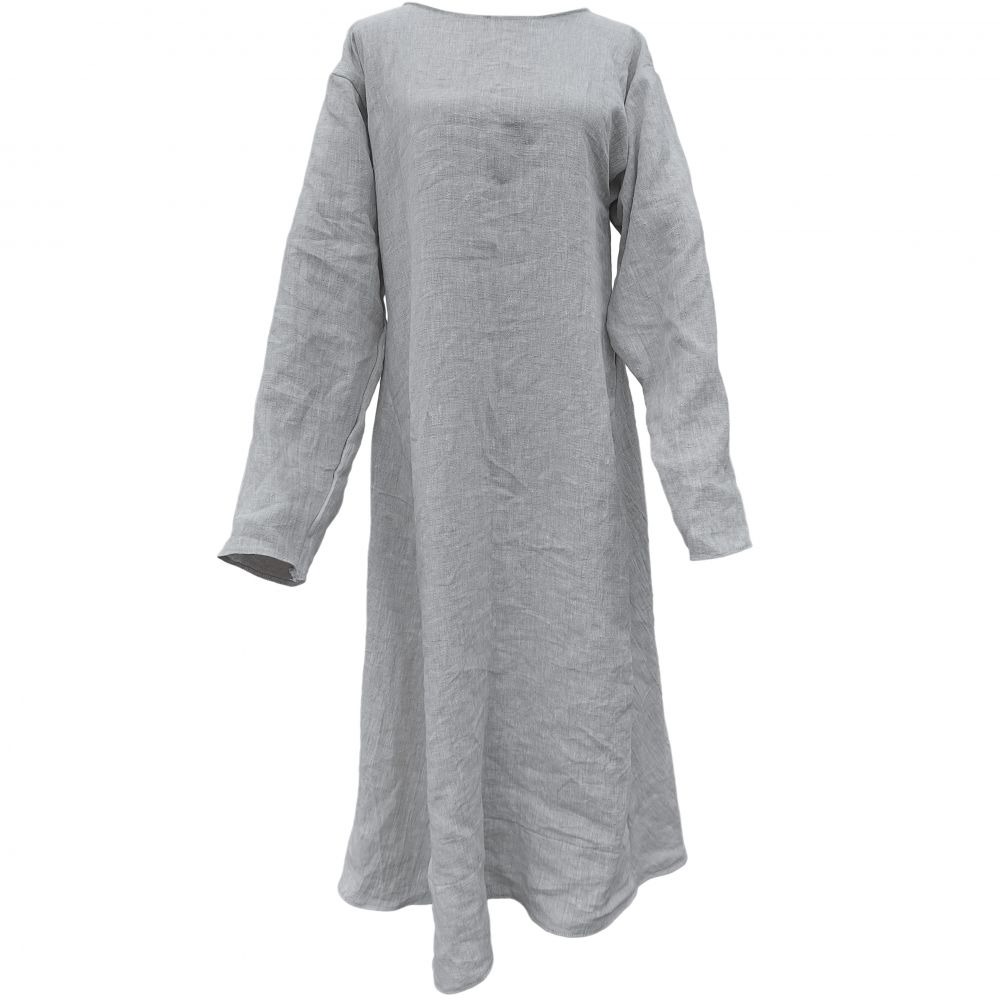
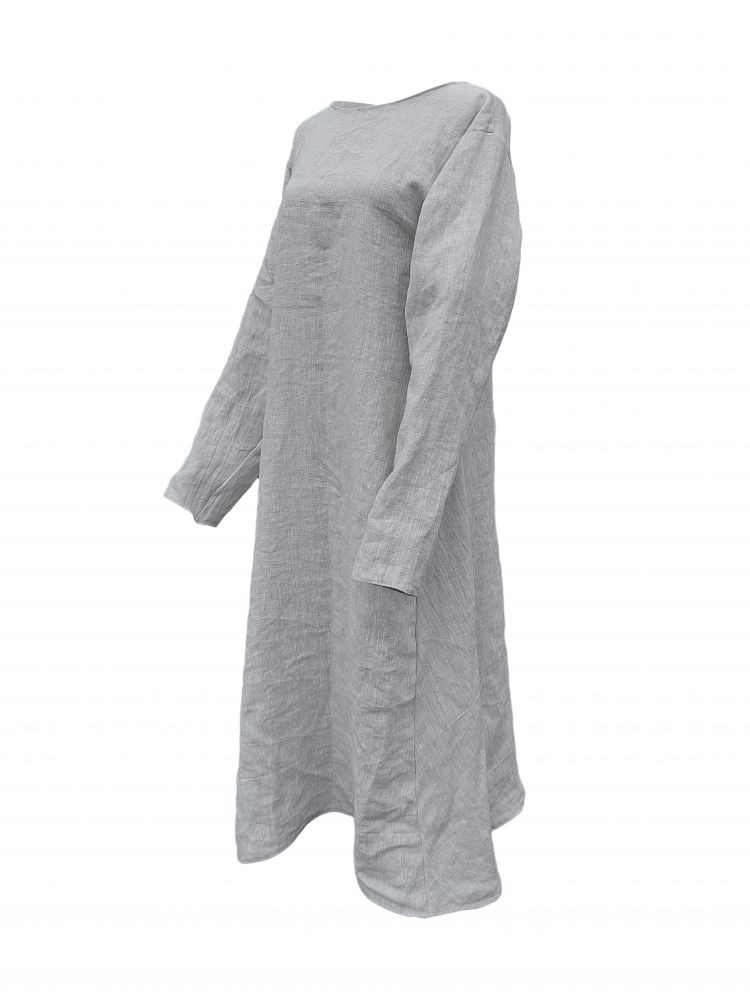
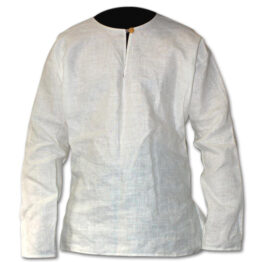
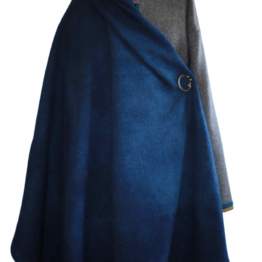
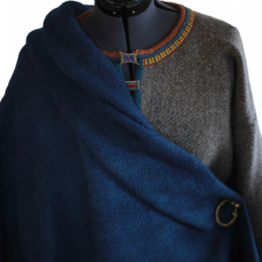
Monastic Cassock with a belt
€230.00
Europe 11th – 17th century
Top: Woolen fabric or broadcloth.
Inner seams – machine.
Outer seams – manual
Colors are different.
The cassock has a loose fit and usually fits the absolute majority of people.
The average size of a cassock is made for a person of 50-54 size and height 175-180 cm
A monastic cassock was usually sewn from coarse fabric in order to outwardly resemble the poor.
In the Middle Ages, some monastic orders allowed wearing a cassock on a naked body in order to mortify the flesh. Franciscan monks belted their cassocks with a rope with three knots. The three knots on the rope-belt of the Franciscans mean the three points of their vow: poverty, chastity and obedience.
These are special “Franciscan knots” tied in a special way.
Various orders and their branches were prescribed different colors by the statutes.
The first Benedictine monks were dressed in brown, or rather, in red; then the color of their robes became black – the color of repentance, mourning and humility. But it is also the color of purity, because spots are immediately noticeable on it!
Only in Germanic and Anglo-Saxon lands, where, probably, they experienced difficulties with black fabrics, they continued to wear chestnut shades.
But still, black clothes were preferred by many: Grandmontines, Servites, monks of Fontevraud, the congregation of Tiron (originally having ash-gray colored robes), Augustinians, Carmelites.
Franciscan Capuchin monks preferred gray colors

Reviews
There are no reviews yet.