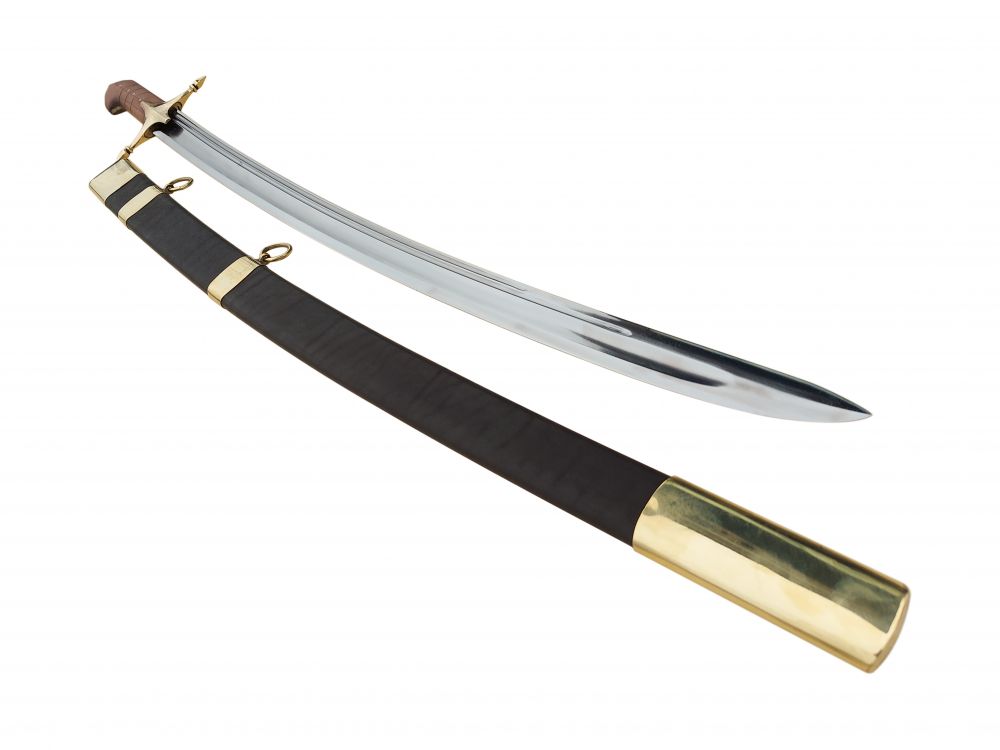
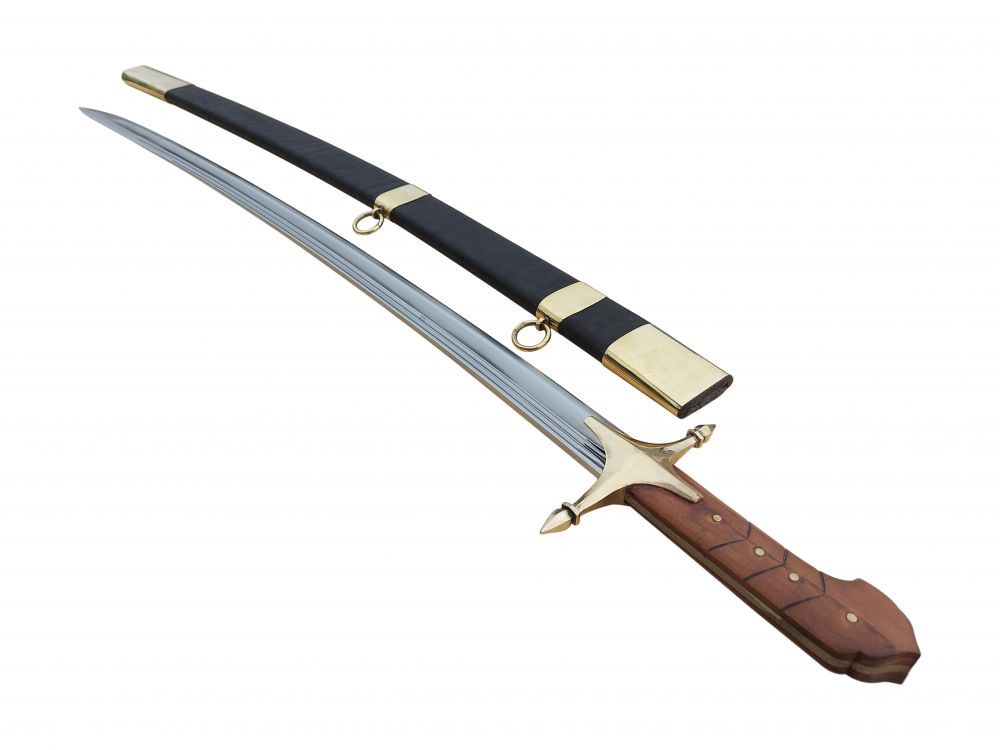
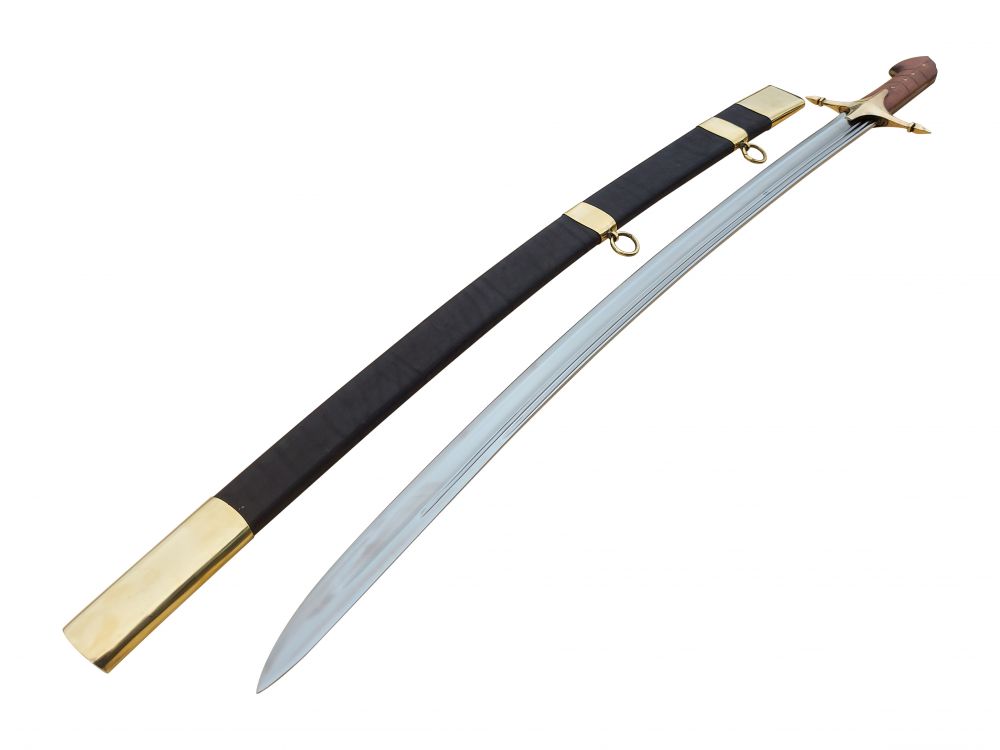
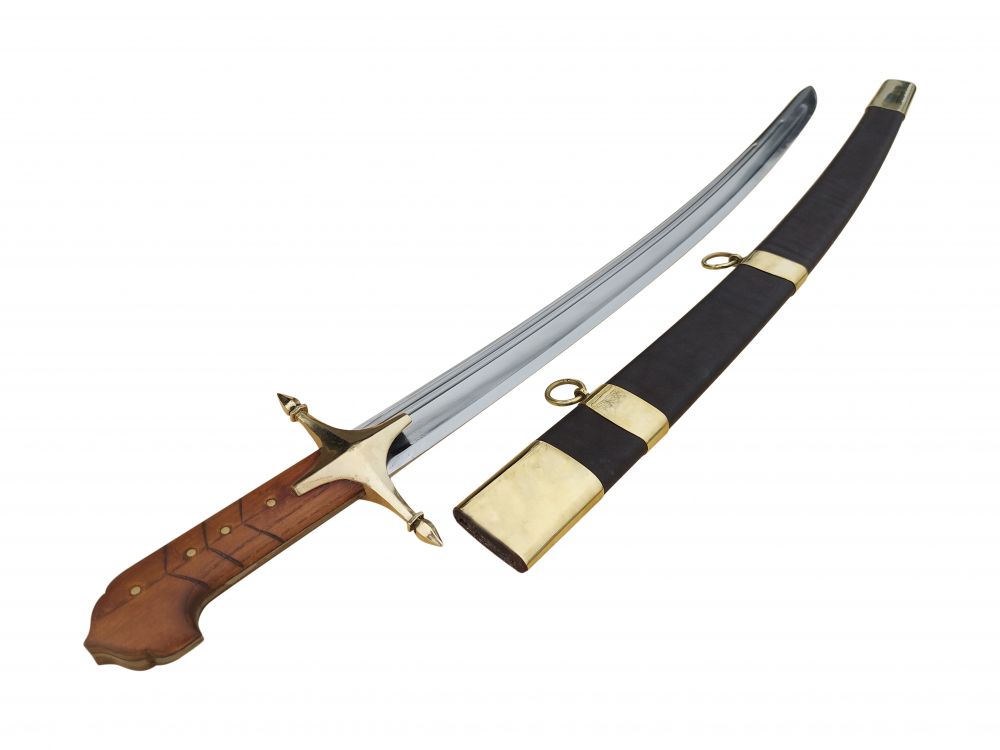
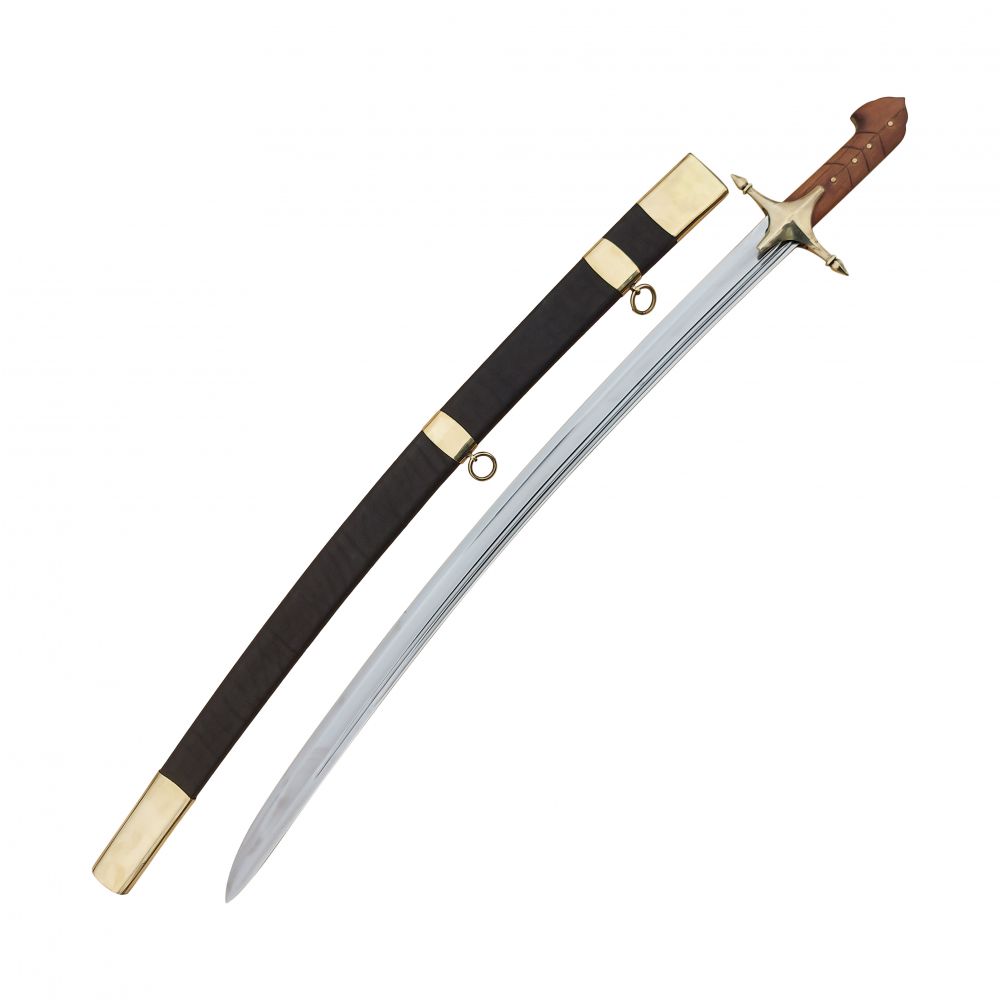
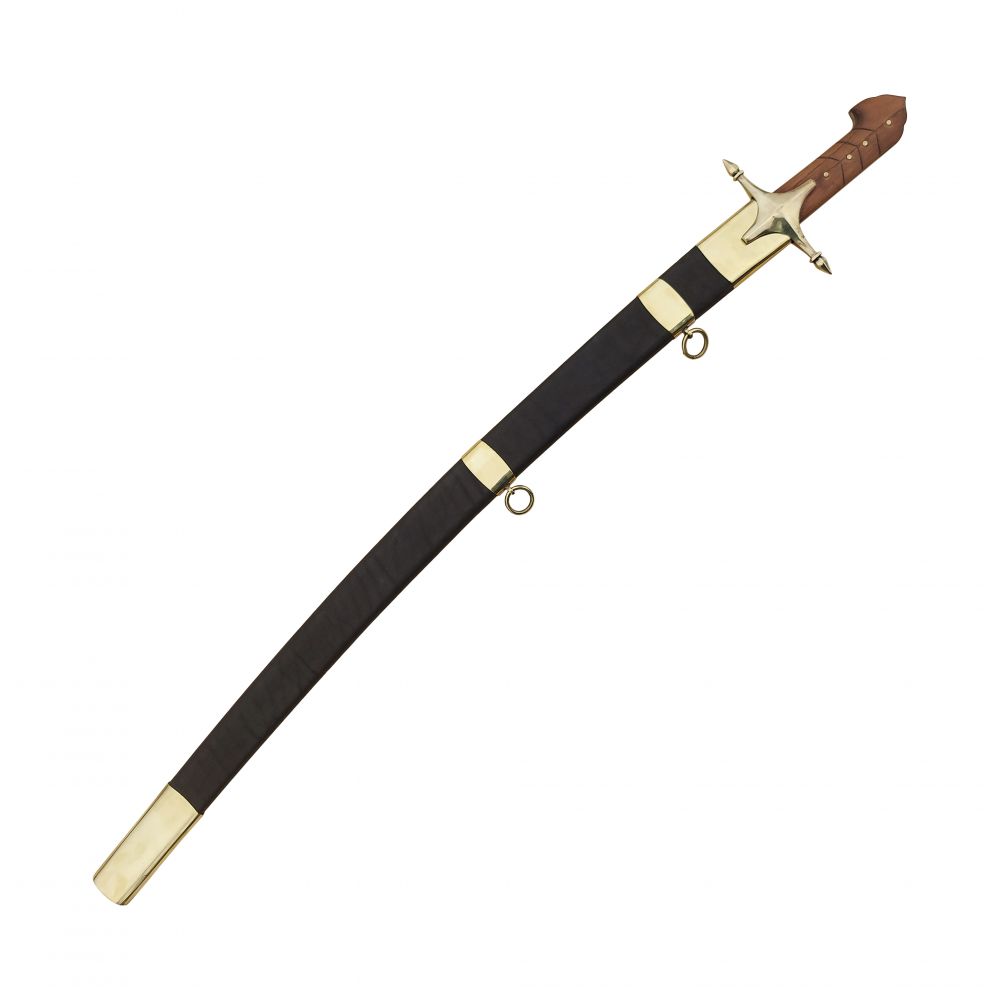
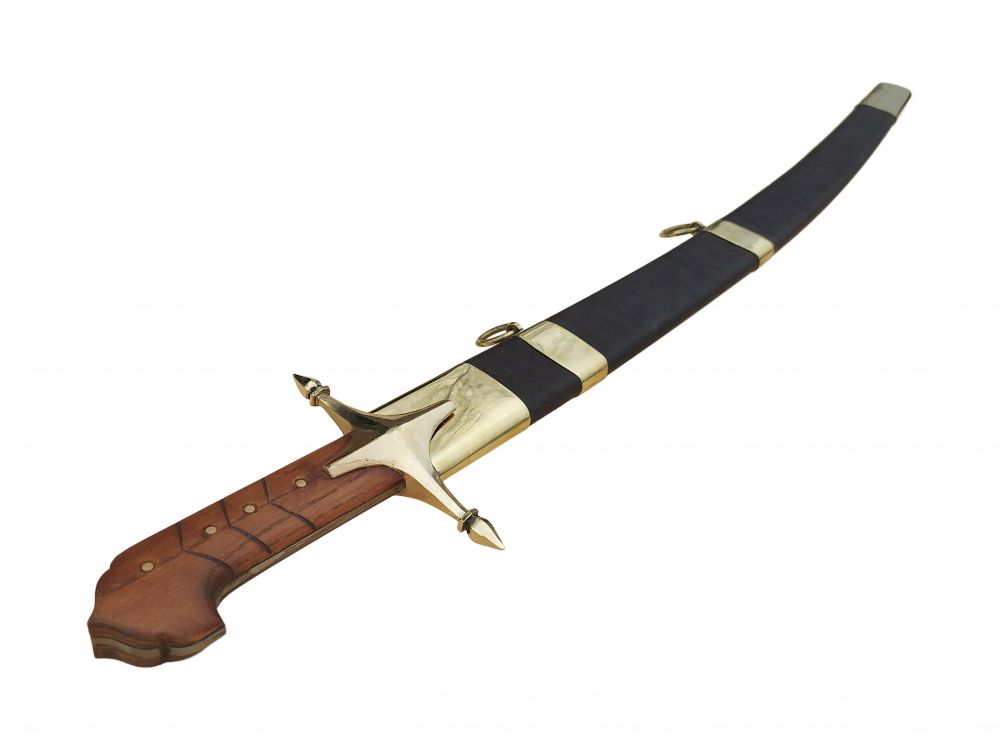
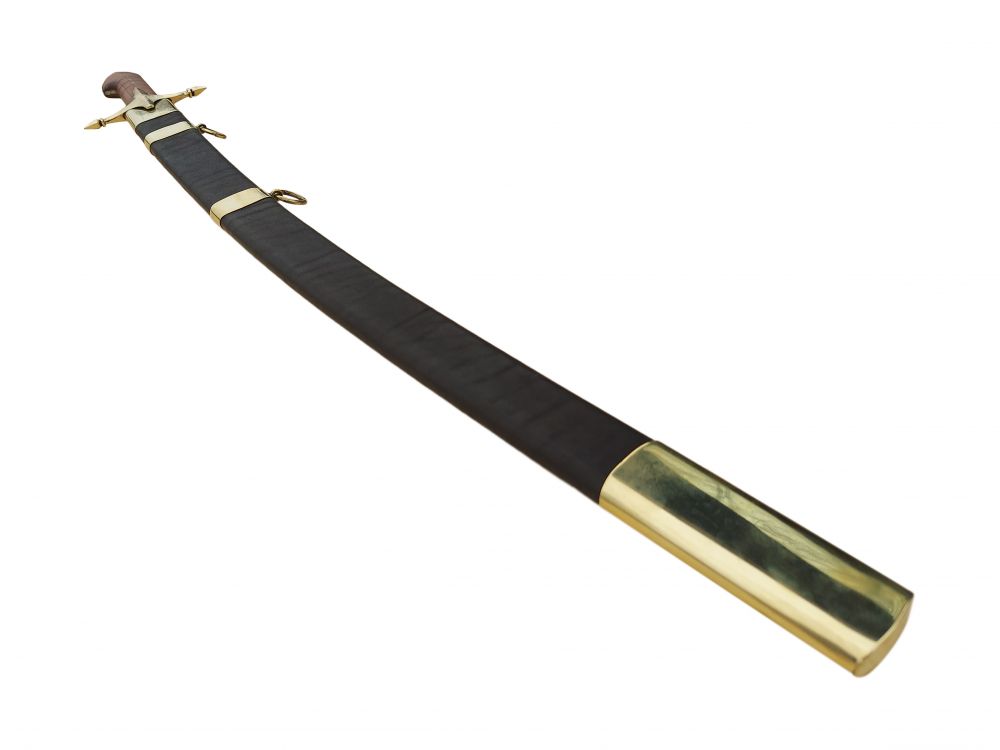
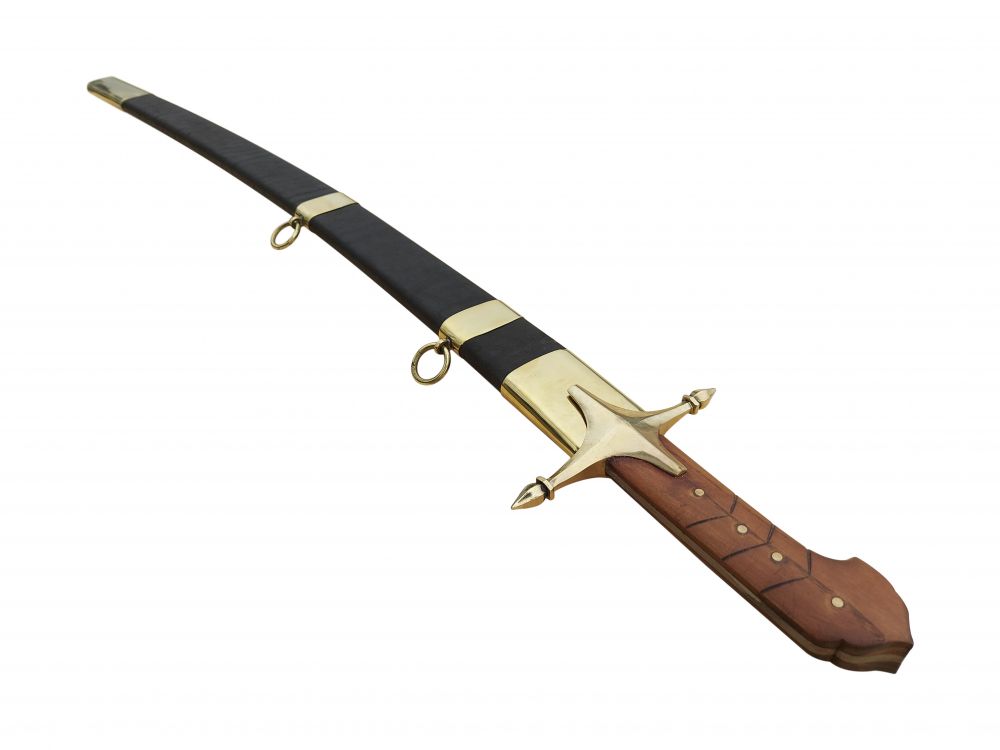
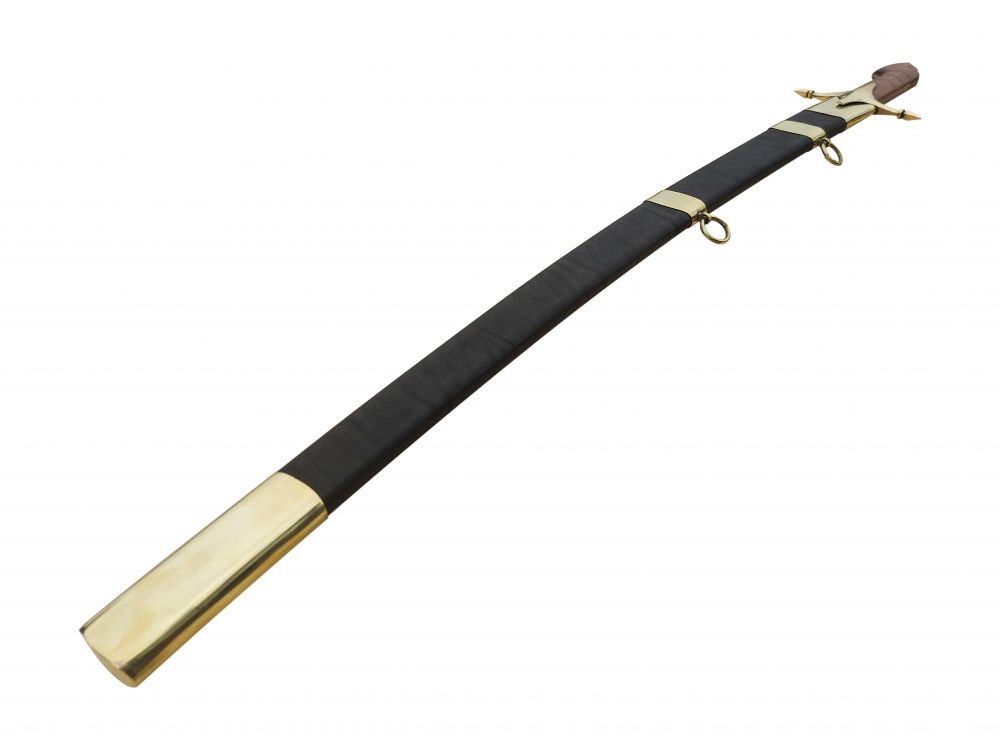
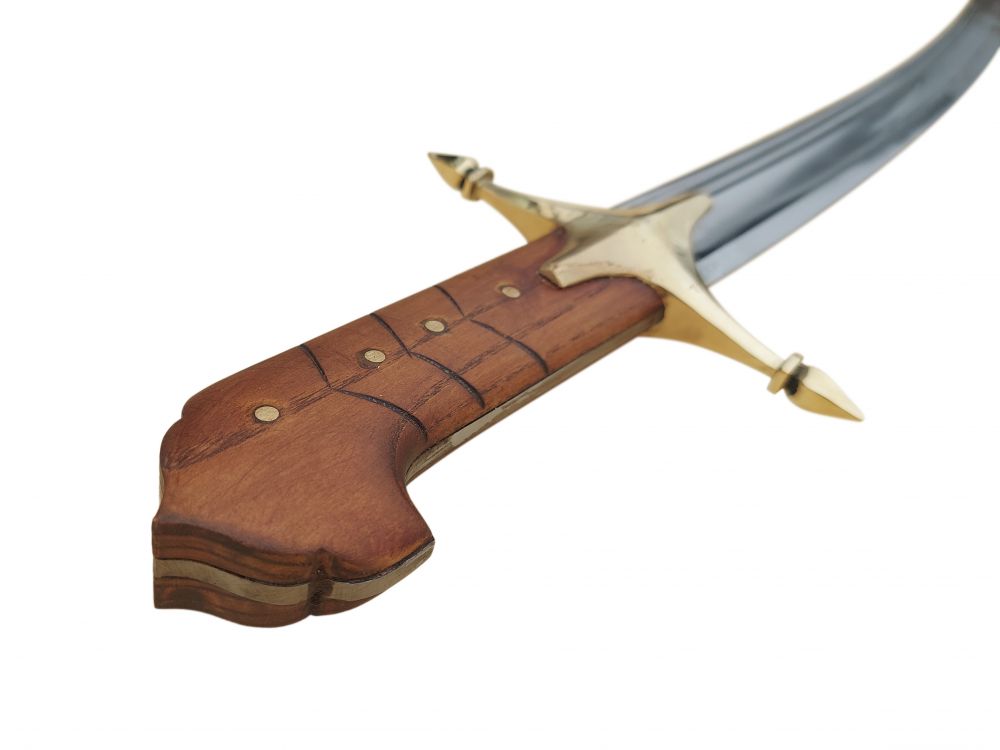
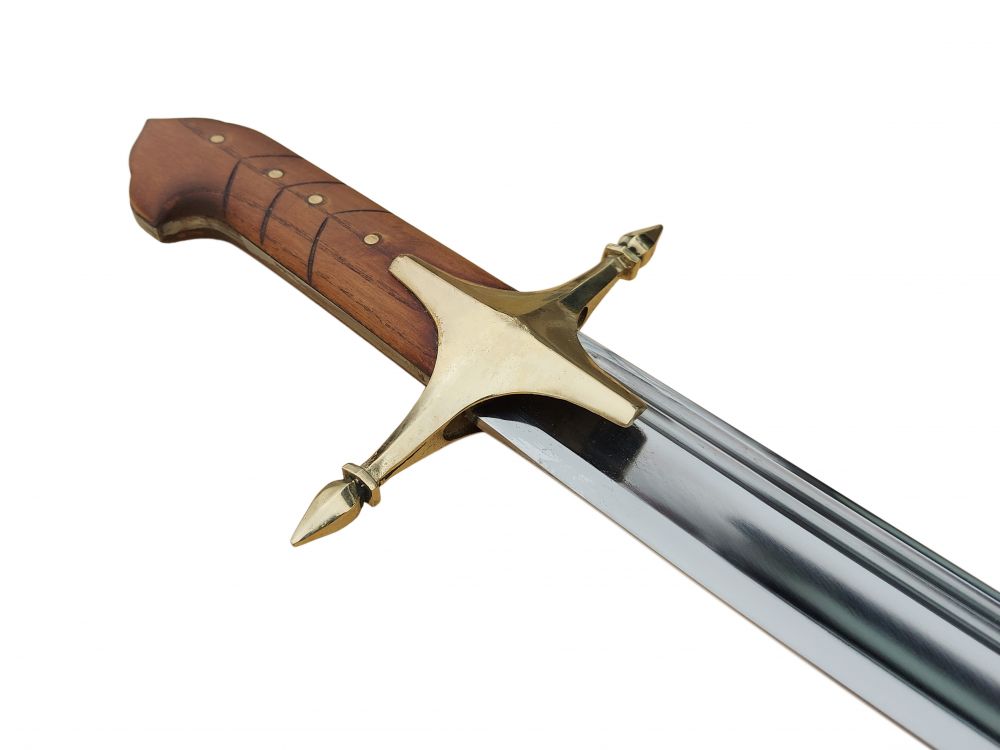
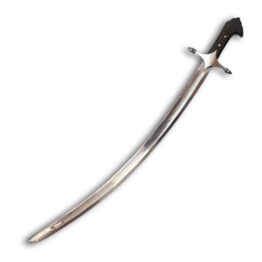
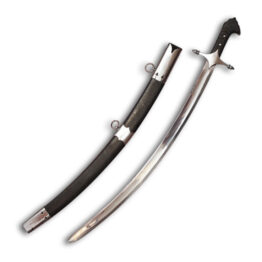
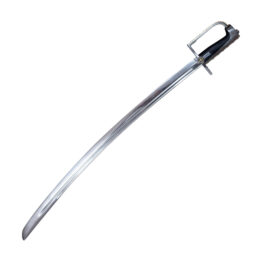
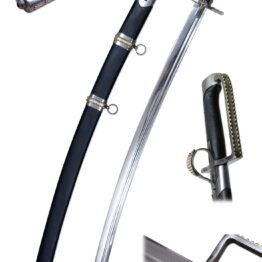
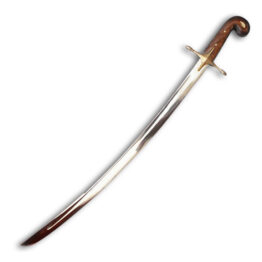
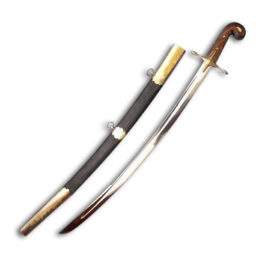
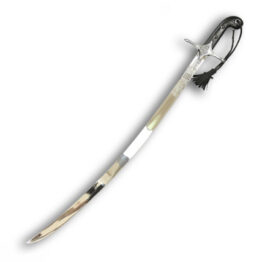
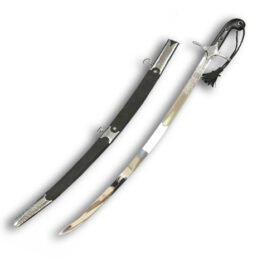
Karabella saber with a brass set
€590.00
The hilt with such a pommel was known among the Greeks, Romans, Germans, who associated the eagle with their supreme god (Zeus, Jupiter, Odin), among the Macedonians, in Assyria, Egypt, and among the Berbers. However, in most cases, the origin of such sabers goes back to Turkey.
For the Poles, the eagle-head pommel got special significance, as the national emblem of Poland is the white eagle on a red background. According to the legend, the founder of the Polish state, the mythical Lech, saw a white eagle against a crimson sunset sky. Later, he founded the city of Gniezno, at that very place where he had seen the eagle.
The design of the blade and hilt was particularly well-suited for fencing and gave rise to a distinct Polish saber-fighting tradition, renowned throughout Europe. It was characterized, for example, by circular strikes, high and sweeping defenses. It was also ideal for performing “eights” with the wrist.
Apart from its primary purpose, the Karabella held status value and was a symbol of pride for the Polish nobility. Some sabers were passed down through generations.
- Blade length: 78-80 cm (30.7-31.5 inches)
- Overall length: 94-96 cm (37.0-37.8 inches)
- Guard width: around 12 cm (4.7 inches)
- Blade width at the guard: 35 mm (1.4 inches)
- Blade thickness at the guard: around 6 mm (0.24 inches)
- Weight: 1150-1200 g (2.5-2.6 lbs)



Reviews
There are no reviews yet.